
What Is Orthopedic Surgery: Insights and Guidance for Future Practitioners
Explore educational and career opportunities for aspiring orthopedic surgeons.
Authored by Robert Roman, MD.
As an introduction, I am currently an Associate Professor of Anatomy and Clinical Skills in the MD program at Medical University of the Americas (MUA), which is located on the island of Nevis in the West Indies. Previously, I spent my career as an orthopedic surgeon in southwest Ohio at a single specialty private practice. I will get more into my background as we proceed.
First though, I have one goal for you and will share some ways to succeed in completing that goal. The goal is to find your passion – the passion that fulfills you, satisfies you and gives you joy. A very perceptive OB/GYN resident once turned to me in the middle of our call night and said, “find that area of medicine that even when awakened at 4 a.m. while ‘on call’, you find yourself happy and readily willing to rise and respond to the call.”
Second, I have yet to find a physician who was unable to achieve their chosen area of medicine, as long as that physician persevered, had patience and was humble. Many, if not the vast majority, of my colleagues have navigated twists, curves and challenges along their career paths, but they all succeeded in the end. I have students from MUA that have entered competitive residencies, so do not lose focus.
So let’s dive into the exciting field or orthopedic surgery and explore what it takes to get there!
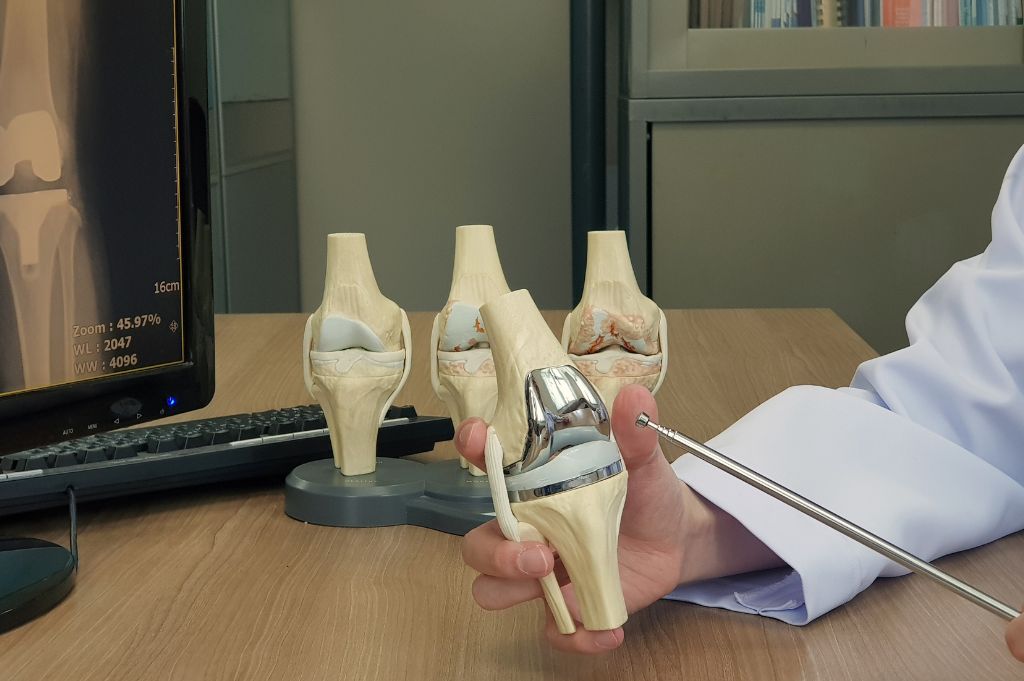

What Is an Orthopedic Surgeon?
An orthopedic surgeon specializes in the diagnosis, treatment and prevention of medical conditions in the musculoskeletal system. Types of orthopedic surgery include knee and shoulder arthroscopies, knee and hip replacements, shoulder joint replacements, trigger finger release, and many more.
Typical Weekly Schedule
An orthopedic surgeon’s week is divided between operating and examining patients in office. Personally, my ratio was three days of office and two days of surgery. Most orthopedic surgeons will also participate in “taking calls” for their groups, including calls when the office is closed and trauma calls at the facilities where they have surgical privileges.
Tips for Getting into Orthopedic Surgery
First and foremost, aspiring orthopedic surgery specialists should demonstrate and pursue their interest in orthopedic surgery early-on. You can do this by spending extra time learning anatomy in your first semester of Basic Science and seeking out mentorship from faculty involved with orthopedic surgery. Once you have completed and mastered anatomy, it would be a good idea for you to become a teaching assistant to further reinforce your mastery of anatomy.
After Basic Science, undertaking a related research project (during the 8-week Research: Literature Review and Analysis module) would also help to reinforce your interest in orthopedic surgery. Then as you move into rotations, putting in the work to shine during your core surgical rotation and related elective rotations will help put you in the best position to secure an orthopedic surgery residency. It goes without saying that good grades will also be required and you would like to position yourself in the top 25% of your graduating class.
I would also recommend seeking out mentors in orthopedic surgery that can help you secure a residency position when the time comes. Typically, this will be a surgeon who would be known to other programs. It is important at this point in time to listen closely to your mentor; they will begin to guide you to programs where they have relationships. One thing every program director wants to hear about a candidate is that the mentor fully supports the candidate as a solid individual with good ethical behavior and the skills (both mental and physical) to complete surgical training successfully.
One key thing to take away is that there is a lot you can do to put yourself in the best position to succeed, but there is also a support system at MUA that will enrich your efforts. The faculty will work closely with you and provide mentorship, and our student services are available to provide help at every step of your med school journey.
Education and Training
After completion of an MD program, a physician should pursue a five-year residency program in orthopedic surgery. At the end of residency, physicians can begin practicing or choose to further specialize by doing another year of fellowship training in areas such as pediatrics, sports medicine, spine, foot and ankle, hands, shoulders, joint replacement, and trauma.
Board Certification
Board certification is an optional two-year process and is valid for ten years. Initially, prior to the start of practice, candidates complete a written examination in general orthopedic surgery and if necessary, a separate examination in their specialty. Practice then begins and continues for two years, at which time the physician sits for an oral board examination. The material covered on oral boards is composed of ten cases, chosen by the board from a list of cases the physician candidate submits and has completed during the first two years of practice (after completion of training).
Curious About Medical School?
Contact the MUA admissions team to learn more about our MD program.
Orthopedic Surgeon Salary and Career Outlook
Compensation is determined by volume of patients seen, both in the office and operated on by the orthopedic surgeon. In the United States, the first $400,000 to $600,000 USD (per year) is easily earned. Due to the shortage of orthopedic surgeons in the United States, making $1,000,000 USD per year is not out of the question. In addition, income can be obtained through ownership of outpatient and inpatient surgery centers and imagining centers (for MRIs). Ownership requirements vary from state-to-state based current legislation. Finally, freedom of schedule and mobility can be enjoyed by doing locum tenens.
Orthopedic Surgery vs. Other Surgical Specialties
To begin, when discussing and considering other surgical specialities, I would ask “what organ system most interests the future physician?” If your answer is the abdomen, the heart, the brain, etc., then there is your calling (specialty). The next question is “within what setting do you want to practice?” That interest will help guide your decision as well.
Personally, with orthopedic surgery I loved the in-depth examination of musculoskeletal anatomy and function, as well as the immediate gratification of a post-operative X-Rays showing work that gave me pride. But the main thing was the satisfaction of returning function to a hampered patient.
I always advise my students to follow their interests and passions. If you are considering orthopedic surgery solely because of the financial benefits or prestige, it will be difficult to maintain your commitment over the course of a long career. Start with what you love and the rest will follow.
Why Choose Medical University of the Americas (MUA)?
At MUA, an aspiring orthopedic surgeon will gain the opportunity to build a solid foundation in the basic sciences and the clinical skills needed to carry them successfully through the residency years.
A clear focus is maintained on the mastery of the curriculum, so that any graduate can, without hesitation, pursue their interests in medicine, whether that be orthopedic surgery, another surgical specialty, primary care, pathology, psychiatry, radiology and so on.
United States medical licensing exams (USMLE) are built into Basic Science and Clinical Medicine portions of med school, and alumni have practiced in the U.S., Canada and many other countries. Faculty members take great pride in the success of our graduates, and in helping them achieve their goals and pursue their interests. One of our most fulfilling and joyful days are when our students achieve residency placements in their desired specialties.
To learn more about the educational journey of a recent graduate who is pursuing a career as a surgeon, check out this testimonial video:
Then start your own journey by contacting us, learning how to apply or joining an upcoming admissions event.

Learn more about blog author Robert Roman, MD.
FAQs About Orthopedic Surgery
Orthopedic surgeons provide treatment for injuries, pain and other issues related to the musculoskeletal system. Your family doctor or another general practitioner may advise that you visit an orthopedic surgeon if you are experiencing consistent pain and reduced mobility related to an injury.
After secondary school, orthopedic surgeons will spend approximately 13-15 years in training. This includes undergraduate studies (4 years), medical school (4 years), residency training (5 years) and possibly a fellowship program for further specialization.
One of the most difficult orthopedic surgeries to recover from is spinal fusion surgery, which involves linking two vertebrae together to reinforce your back’s structure.
According to salary.com, the average salary for an orthopedic surgeon in the U.S. was $549,550 USD per year in April 2026. The Government of Canada reported that the median annual income for orthopedic surgeons in CA was $419,180 CAD in November 2025.
Useful Links
MUA is committed to supporting prospective students throughout the admissions process. Please click the following links for detailed information about each topic: